Hopfield Network
A binary Hopfield neural network in SystemVerilog, taken from RTL through synthesis to GDSII.
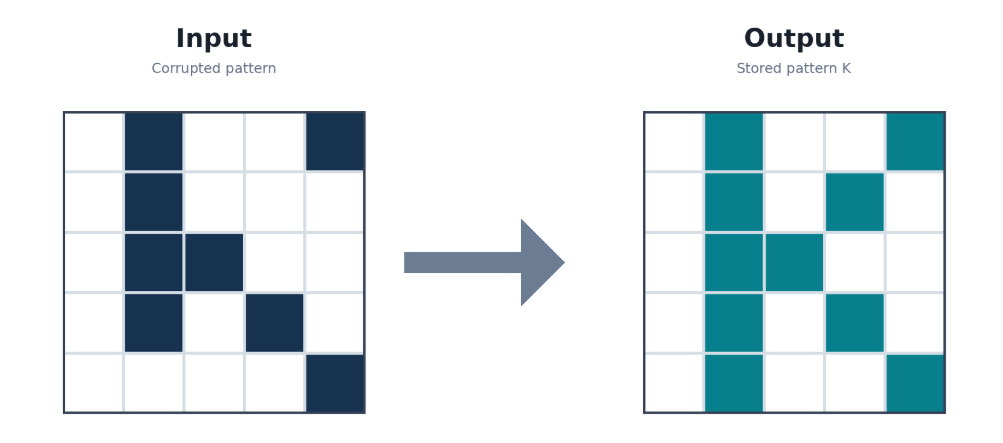
A Hopfield network is an associative memory: instead of retrieving data by address, it recalls a stored pattern from the content of a noisy or incomplete input, by repeatedly updating neuron states until the network settles into a stable configuration. This project implements one as a deterministic, synthesizable digital system, with connection weights generated by the Hebbian rule, and carries it through physical implementation to a final GDSII layout.
Physical implementation
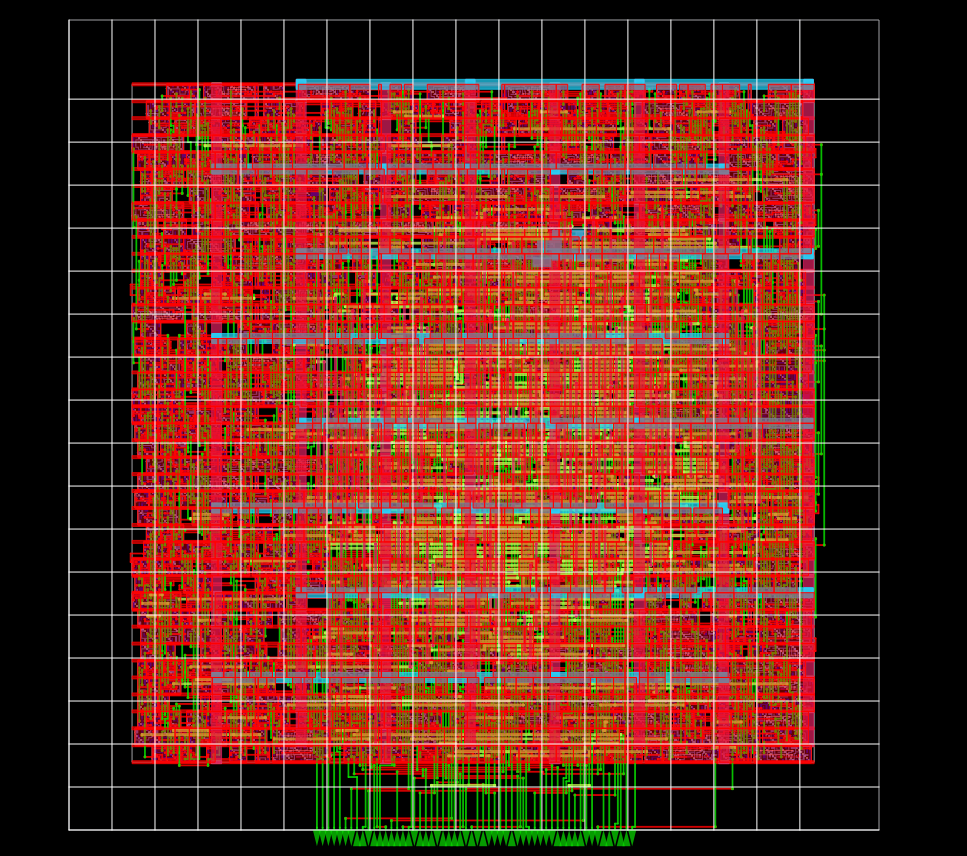
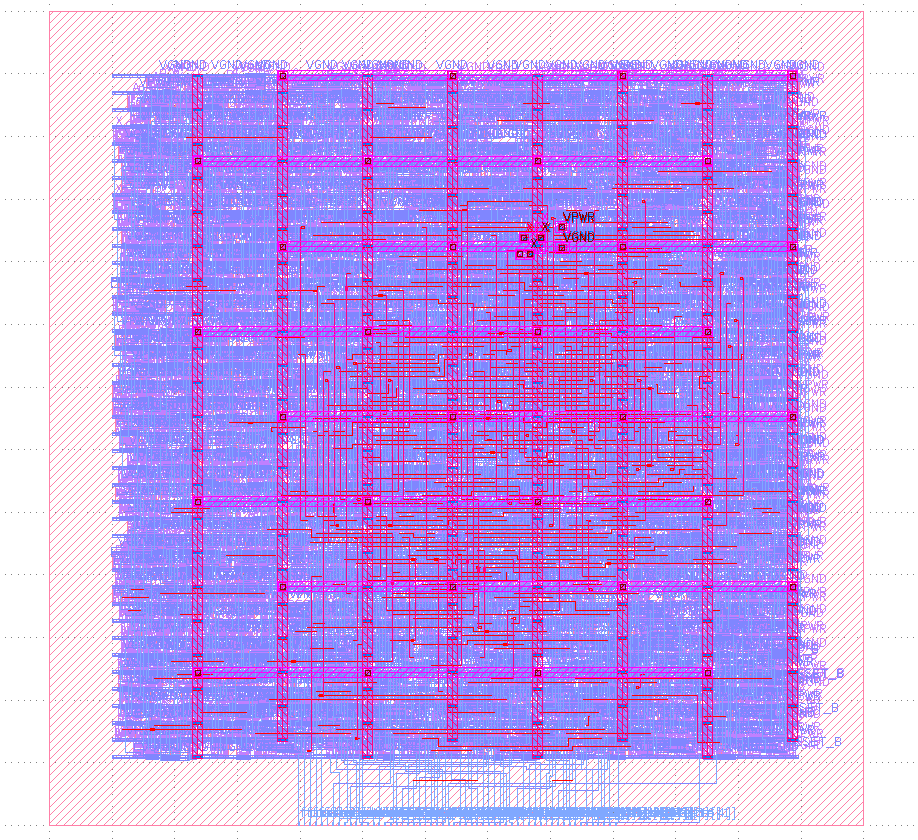
Beyond synthesis, the design was taken through floorplanning, placement, clock tree synthesis, and global and detailed routing using OpenROAD and the Sky130HD standard-cell library, culminating in GDSII layout generation.
Physical characterization, Sky130HD
| Implementation stage | Cell area | Cells | Crit. path | Fmax | Power |
|---|---|---|---|---|---|
| Post-Synthesis | 9,336.45 µm² | 1,213 | 20.02 ns | ~49.95 MHz | 392 µW |
| Post-P&R (estimated parasitics) | 9,724.33 µm² | 1,334 | 20.206 ns | ~49.5 MHz | 504 µW |
| Post-P&R (extracted parasitics) | 9,724.33 µm² | 1,334 | 19.47 ns | ~51.36 MHz | 481 µW |
Verification
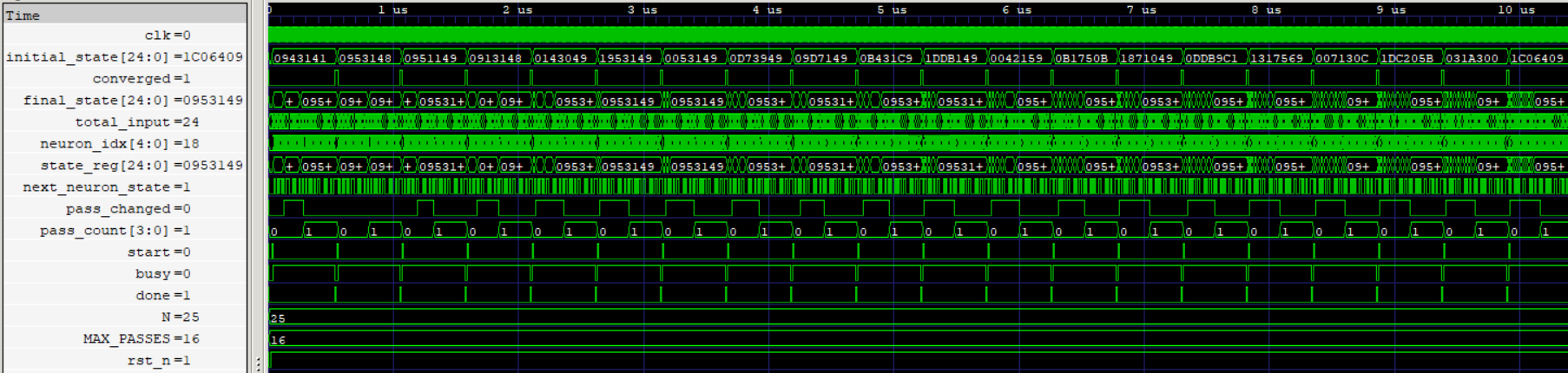
The implementation was verified at both the RTL and gate level: all 20 selected test inputs converged to the expected stored pattern in RTL simulation (20/20) and in post-synthesis gate-level simulation (20/20).