Assembler
A custom assembly language and Python assembler, the step from wires to words.
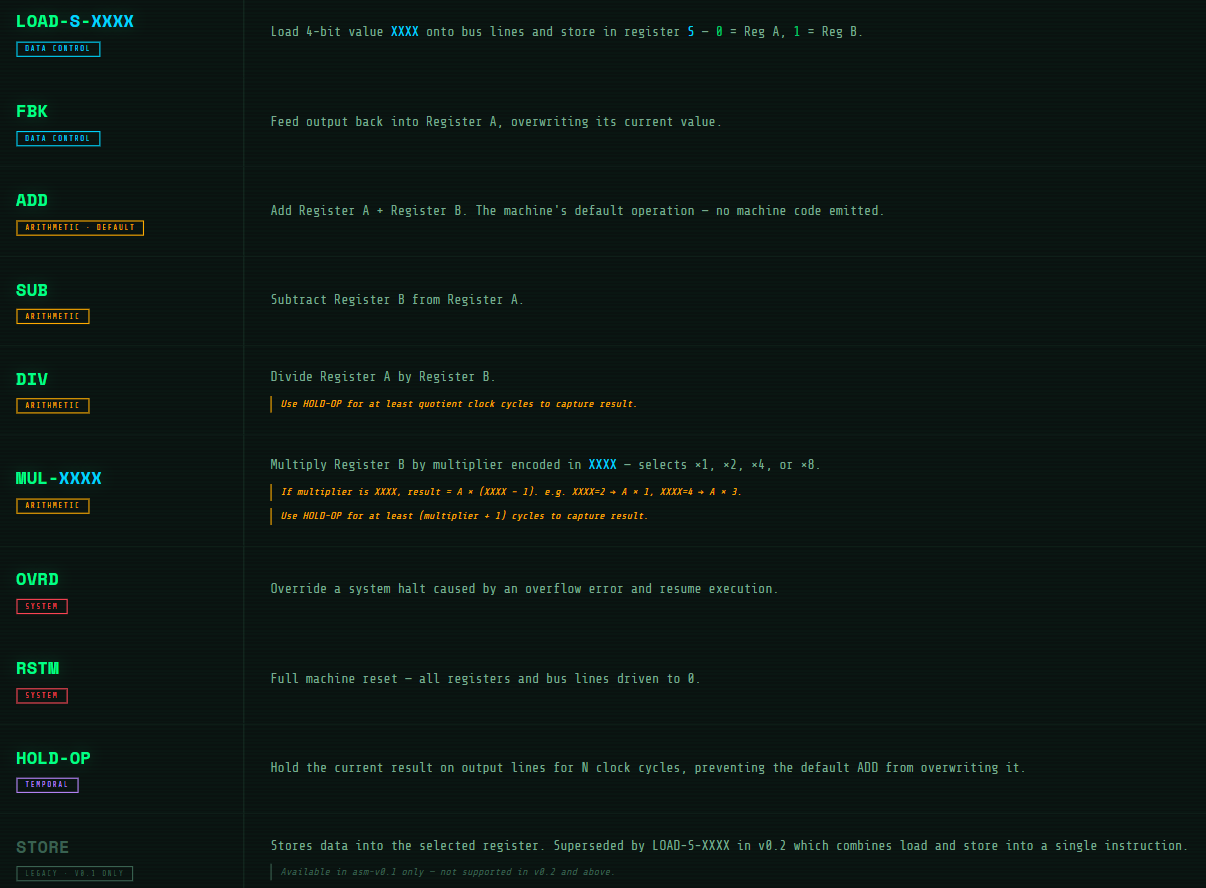
Once the Repeated Arithmetic Machine could execute stored instructions in raw machine code, the natural next step was a symbolic layer above it: an assembly language whose mnemonics map directly onto the machine's own hardware primitives, and a Python assembler that lexes, parses, and validates programs before translating them down to machine code.
Versions built
- asm-v0.1, data-control operations mapped to assembly.
- asm-v0.2, arithmetic, system, and temporal control mapped to assembly.
- asm-v0.3, syntax analysis, semantic analysis, and an instruction execution report added.
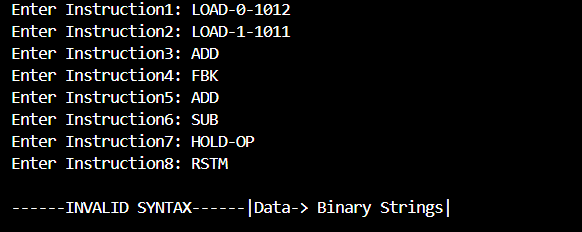
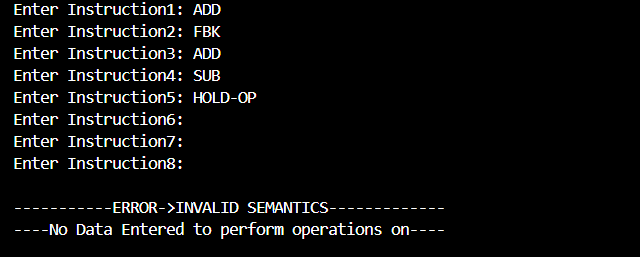
Syntax analysis catches malformed programs before they reach the assembler, saving computation on programs that would fail anyway. Semantic analysis goes a step further, catching logical flaws, like referencing an undefined address, that are syntactically valid but would fail on the real machine.
Stack: Python, syntax and semantic analysis